

05/07/2025 di Segno
Un marchio all'avanguardia fluido termovettore (HTF), Paratherm is manufactured by Lubrizol’s CPI Fluid Engineering divisione.
Rinomato per la sua esperienza nella formulazione e nella fornitura di una selezione completa di fluidi che operano a temperature estremamente alte e basse, offre HTF che offrono prestazioni, sicurezza ed efficienza ottimizzate.
As a result, many operations using heat transfer systems often opt to update their current fluid selection to Paratherm. However, to benefit fully from what these advanced HTFs offer, it is essential that users clean and flush their system before making the switch.
In questa guida dettagliata, daremo uno sguardo più da vicino a questo processo preparatorio, ai passaggi coinvolti e ai punti chiave da considerare.
Overview of switching fluido termovettore to Paratherm
Before making the move to using Paratherm, it is critical that the heat transfer system is cleaned and flushed. This process involves all old fluid, contaminants and debris being effectively removed. This is because any unwanted matter remaining in the system will negatively impact the active service life and performance levels of the new HTF.
Paratherm provides helpful guidance on how to prepare the system for its fluids that should always be followed closely for best results.
Valutazione
Il primo passo è far analizzare professionalmente il fluido attuale nel sistema di trasferimento del calore. Una revisione esperta di un campione HTF rivelerà l'entità dell'imbrattamento del sistema e determinerà la soluzione detergente adeguata da utilizzare e la velocità di trattamento appropriata.
Preparazione
Prima di scaricare il fluido esistente dall'impianto, gli operatori devono montare un filtro a Y a monte della pompa. Il filtro dovrebbe avere uno schermo da 60 mesh in grado di catturare i detriti mentre l'HTF esaurito lascia il sistema.
Ove possibile, il vecchio fluido nel sistema dovrebbe essere riscaldato a circa 107 °C. Ciò riduce la viscosità del fluido e aiuta i contaminanti a rimanere in sospensione durante il processo di drenaggio.
Ensure the pump is still running as the old HTF is drained from the system. This stops any particles that have settled from contaminating the fresh supply of Paratherm fluid.
Pulizia
With the system completely drained, cleaning can commence. Introduce the appropriate Paratherm cleaning agent. This may be Paratherm LC System Cleaner O Paratherm EC System Cleaner. Entrambe sono soluzioni detergenti brevettate specificatamente formulate per abbattere efficacemente fanghi e altri depositi nei sistemi di trasferimento di calore.
Gli utenti che introducono il pulitore di sistema dovrebbero aggiungerlo lentamente, con attenzione e secondo le istruzioni per l'uso. Mentre il sistema è alla temperatura operativa, la soluzione detergente deve poter circolare per la durata consigliata.
Durante il ciclo di pulizia, è necessario un monitoraggio regolare e potrebbe essere necessario pulire più volte lo schermo del filtro a Y durante il processo.
Lavaggio
Una volta completato il ciclo di pulizia, il riscaldatore del sistema può essere spento. Tuttavia, la pompa dovrebbe continuare a far circolare l'aspirapolvere fino a quando il sistema non si è raffreddato a una temperatura sicura. Spegnere il riscaldatore ma mantenere la pompa in circolazione finché il sistema non si raffredda a 93 °C o meno.
Under certain circumstances, like where the older fluid was fouled heavily O when the new HTF must operate at a substantially different temperature, operators should consider flushing the system with a charge of the brand-new Paratherm fluid O using a dedicated flushing fluid.
Ricarica
With these stages complete, the heat transfer system is now ready to intake Paratherm. As with the cleaning agents, users should add the fresh supply of HTF slowly and carefully while meticulously following all product instructions.
The system can now be restarted. Operators must follow Paratherm’s recommended start-up procedures while monitoring for any indications of water contamination. These may include expansion tank geysers and pump cavitation.
Ulteriori considerazioni
It is crucial that maintenance teams always ensure that the cleaning solution and flushing fluid are products compatible with the old HTF and the new Paratherm fluid. It is also important that those tasked with fluid changes avoid contaminating the system with water when cleaning and refilling. Any water introduced must be removed entirely before the system can see active use.
Le linee guida del produttore dell'apparecchiatura originale (OEM) devono essere sempre rispettate in ogni fase del processo. Infine, ogni volta che si maneggiano HTF e detergenti, è necessario indossare adeguati dispositivi di protezione individuale (DPI) per promuovere la salute e la sicurezza sul posto.
Potrebbe interessarti anche:

Cos'è l'olio termico?
L'olio termico, a volte indicato come fluido termovettore (HTF), è un olio appositamente progettato sviluppato per il riscaldamento industriale.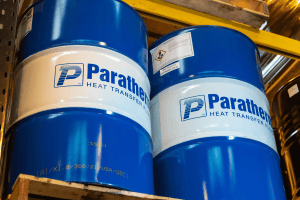
A guide to using Paratherm NF for temperature control
A CPI Fluid Engineering brand, Paratherm NF is a food grade fluido termovettore with an impressive operating range of 332 °C to -4 °C.