

19/08/2026 by Cameron Clarke
A new study published in a Nature journal has found through modelling that the production of hydrocarbons could benefit substantially from artificial intelligence (AI) technology.
The research was led by two former employees of Microsoft, Holly and Will Alpine, alongside an independent researcher and other researchers at Purdue University. While both oil and gas production and renewable generation should in theory benefit from AI, the study argues that the former will benefit much more than the latter. Indeed, the hydrocarbons sector has already started, as pointed out by co-author Holly Alpine:
“Fossil fuel applications are already happening at scale today – real contracts, real deployment, with evidence from industry operators and financial analysts. Renewables applications are still largely at the pilot or academic-study stage – more speculative, more dependent on deployment barriers like permitting and interconnection getting resolved.”
Chevron, Aramco and ExxonMobil, which are also known for the Texaco, Valvoline and Mobil lubricant, coolant and grease brands, are already employing AI. They say the technology is helping to identify new resources and recover more from existing finds.
The International Energy Agency has estimated that AI could drive a 5% boost in the oil and gas reserves that could be feasibly recovered. It could also deliver a 10% saving in the cost of deepwater developments. Rystad Energy also projected that AI could add a cumulative value of around £370 billion in hydrocarbons exploration and production by 2030. Some experts argue that greater efforts should also be directed at improving renewables through AI.
You may also interested in:

Oil renewal in Venezuela could need $100 billion in investment
Raising Venezuelan oil production capacity will likely require massive investment in the restructuring effort being led by the United States.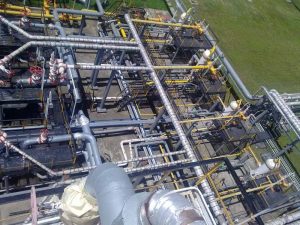
TotalEnergies decides to fully develop Caspian Absheron field
Together with its joint venture partners, TotalEnergies has announced a final investment decision (FID) for the full-field development of the Absheron field.