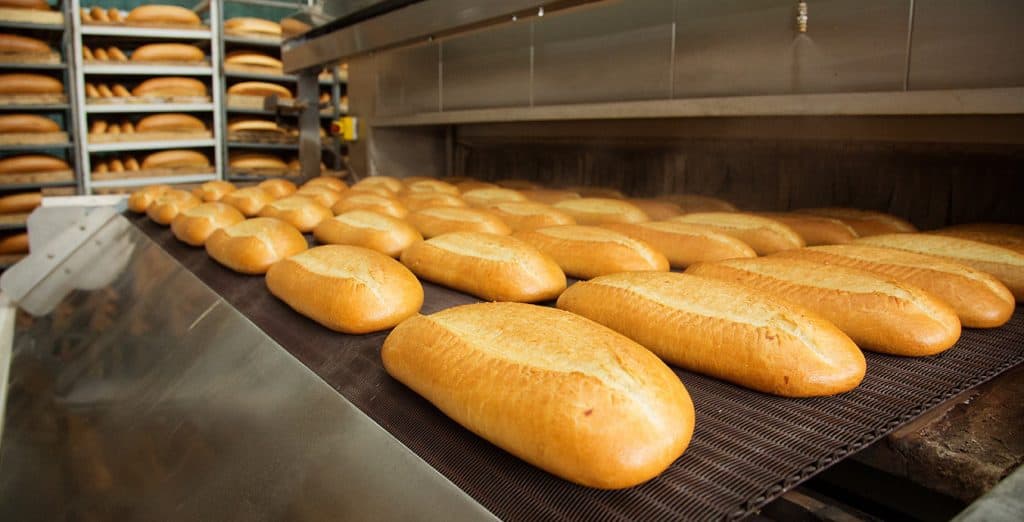
In kaum einem Industriebetrieb ist die Auswahl des Schmierstoffs so entscheidend wie bei der Verarbeitung von Lebensmitteln. Solche Öle müssen lebensmittelecht sein, damit die daraus hergestellten Lebensmittel an die Öffentlichkeit verkauft werden können, weshalb wir bei Oil Store hat sorgfältig eine Reihe lebensmittelechter Schmierstoffe und Fette ausgewählt, die von Marktführern wie hergestellt werden Mobil Und Fuchs, um allen Anforderungen der Lebensmittelproduktion gerecht zu werden. Zum Schutz der Öffentlichkeit bei der Lebensmittelverarbeitung gibt es Schutzgesetze. Aus diesem Grund müssen die allerbesten lebensmittelechten Schmierstoffe dort, wo die Möglichkeit eines Kontakts mit Lebensmitteln besteht, entsprechend zertifiziert sein. In der Regel sind die von uns verkauften Produkte NSF-zertifiziert und für die Verwendung in der Lebensmittelverarbeitung NSF-registriert. Bei der Formulierung solcher Schmierstoffe werden auch die FLT-Qualitätsstandards berücksichtigt. Darüber hinaus sind einige Schmierstoffe maßgeschneidert für den Einsatz bei extrem hohen Temperaturen, wie sie beispielsweise in Verarbeitungs- und Verpackungsanlagen für Lebensmittel und Getränke vorkommen. Zu den anderen lebensmittelechten Ölen und Fetten gehören Schmierstoffe von höchster Qualität, die für die Verwendung mit Lager-, Kompressor-, Getriebe- und Hydrauliksystemen konzipiert sind, die häufig in Fabriken zur Lebensmittelproduktion zu finden sind. Oil Store kann genau das richtige Produkt für die Lebensmittelverarbeitungsausrüstung und die jeweilige Aufgabe liefern, sodass Sie beruhigt bestellen können. Nehmen Sie unbedingt Kontakt mit uns auf, wenn wir Ihnen bei Ihrer Auswahl in irgendeiner Weise behilflich sein können.
What are food-safe lubricants?
Food-safe lubricants, sometimes referred to as food-grade lubricants, are solutions that have been specially formulated to have non-toxic properties. They are specifically designed for lubricating machinery used in operations where incidental contact with consumable products can occur, such as in the beverage, food Und pharmaceutical manufacturing sectors.Key characteristics of food-safe lubricants
Featuring a clean formulation, food-safe lubricants are free from heavy metals such as arsenic Und lead, as well as teratogens, mutagens Und carcinogens. They are engineered to have no taste, colour or odour, so they do not alter the appearance, aroma or flavour of consumable products. Food-safe lubricants are also non-toxic Und chemically stable to help ensure safety if trace amounts enter a production batch. To safeguard sensitive consumers, they are also designed without common dietary allergens. Applications for food-safe lubricants often demand durability Und high performance. As such, they can withstand an extreme range of temperatures, from cold-storage freezers to high-heat ovens, without evaporating or breaking down. To cope with aggressive cleaning chemicals Und processes such as steam sterilisation, which are used to keep workplaces hygienic, they can also resist moisture. As robust lubricants, they effectively reduce mechanical friction Und help prevent rust, extending equipment lifespan. They are also compatible with multiple materials found in food-safe applications, such as rubber seals, plastics Und elastomers.Classifications of food-safe lubricants
There are different food-safe classifications for different applications.H1 lubricants
These food-grade lubricants are used in food-processing operations where there is the potential for incidental food contact. To achieve H1 approval, lubricant manufacturers such as Fuchs or Klüber must demonstrate that all ingredients in the formulation are permitted substances.H2 lubricants
Suitable for use on machine parts Und equipment in areas where no contact with food or food-related products is possible, these lubricants may also be used as release agents on machinery.H3 lubricants
Sometimes called soluble oils, these lubricants are used to clean equipment Und combat corrosion Und rust on items such as trolleys Und meat hooks. While they are food-grade, they must be wiped off before the equipment is used.HT1 lubricants
A type of heat-transfer oil, this food-safe lubricant is used in both primary Und secondary cooling Und heating systems at food-processing facilities where incidental food contact is a risk.3H lubricants
These lubricants are release agents, typically vegetable oils, used on equipment where contact with food is inevitable, such as blades, plates Und seals.