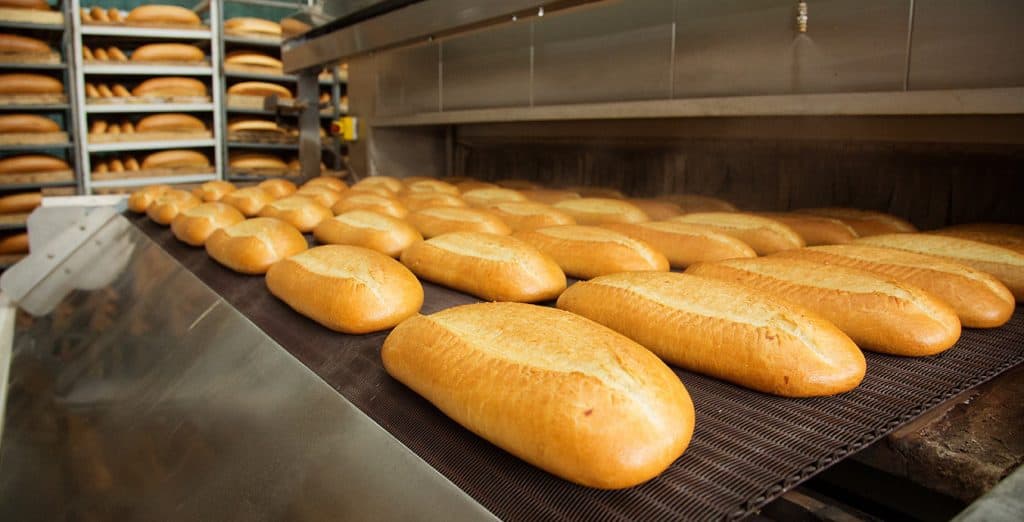
Existem poucas operações industriais onde a seleção do lubrificante é tão crucial como no processamento de produtos alimentícios. Esses óleos têm de ser seguros para os alimentos, para que os géneros alimentícios resultantes possam ser vendidos ao público, razão pela qual nós, em Oil Store escolheu cuidadosamente uma gama de lubrificantes e graxas seguras para alimentos, produzidos por líderes de mercado como Mobil e Fuchs, para atender a todas as necessidades de produção de alimentos. Existe legislação protetora para proteger o público quando se trata de processamento de alimentos, razão pela qual os melhores lubrificantes seguros para alimentos precisam ser devidamente certificados onde houver qualquer possibilidade de contato com alimentos. Normalmente, os produtos que vendemos são certificados pela NSF, bem como registrados pela NSF para uso no processamento de alimentos. Os Padrões de Qualidade FLT também são levados em consideração na formulação desses lubrificantes. Além disso, alguns lubrificantes são feitos sob medida para uso em temperaturas extremamente elevadas, como aquelas encontradas em fábricas de processamento e embalagem de alimentos e bebidas. Outros óleos e graxas seguros para alimentos incluem lubrificantes de excelente qualidade, projetados para uso com o tipo de rolamento, compressor, engrenagem e sistemas hidráulicos frequentemente encontrados em fábricas de produção de alimentos. Oil Store podemos fornecer o produto certo para o equipamento de processamento de alimentos e a tarefa envolvida, para que você possa fazer o pedido com confiança. Certifique-se de entrar em contato se pudermos ajudar com sua seleção de alguma forma.
What are food-safe lubricants?
Food-safe lubricants, sometimes referred to as food-grade lubricants, are solutions that have been specially formulated to have non-toxic properties. They are specifically designed for lubricating machinery used in operations where incidental contact with consumable products can occur, such as in the beverage, food e pharmaceutical manufacturing sectors.Key characteristics of food-safe lubricants
Featuring a clean formulation, food-safe lubricants are free from heavy metals such as arsenic e lead, as well as teratogens, mutagens e carcinogens. They are engineered to have no taste, colour or odour, so they do not alter the appearance, aroma or flavour of consumable products. Food-safe lubricants are also non-toxic e chemically stable to help ensure safety if trace amounts enter a production batch. To safeguard sensitive consumers, they are also designed without common dietary allergens. Applications for food-safe lubricants often demand durability e high performance. As such, they can withstand an extreme range of temperatures, from cold-storage freezers to high-heat ovens, without evaporating or breaking down. To cope with aggressive cleaning chemicals e processes such as steam sterilisation, which are used to keep workplaces hygienic, they can also resist moisture. As robust lubricants, they effectively reduce mechanical friction e help prevent rust, extending equipment lifespan. They are also compatible with multiple materials found in food-safe applications, such as rubber seals, plastics e elastomers.Classifications of food-safe lubricants
There are different food-safe classifications for different applications.H1 lubricants
These food-grade lubricants are used in food-processing operations where there is the potential for incidental food contact. To achieve H1 approval, lubricant manufacturers such as Fuchs or Klüber must demonstrate that all ingredients in the formulation are permitted substances.H2 lubricants
Suitable for use on machine parts e equipment in areas where no contact with food or food-related products is possible, these lubricants may also be used as release agents on machinery.H3 lubricants
Sometimes called soluble oils, these lubricants are used to clean equipment e combat corrosion e rust on items such as trolleys e meat hooks. While they are food-grade, they must be wiped off before the equipment is used.HT1 lubricants
A type of heat-transfer oil, this food-safe lubricant is used in both primary e secondary cooling e heating systems at food-processing facilities where incidental food contact is a risk.3H lubricants
These lubricants are release agents, typically vegetable oils, used on equipment where contact with food is inevitable, such as blades, plates e seals.