
06/11/2025 by Daniel Tait
From Shell to Fuchs, most lubricant makers offer their products in a wide range of formats to suit specific applications.
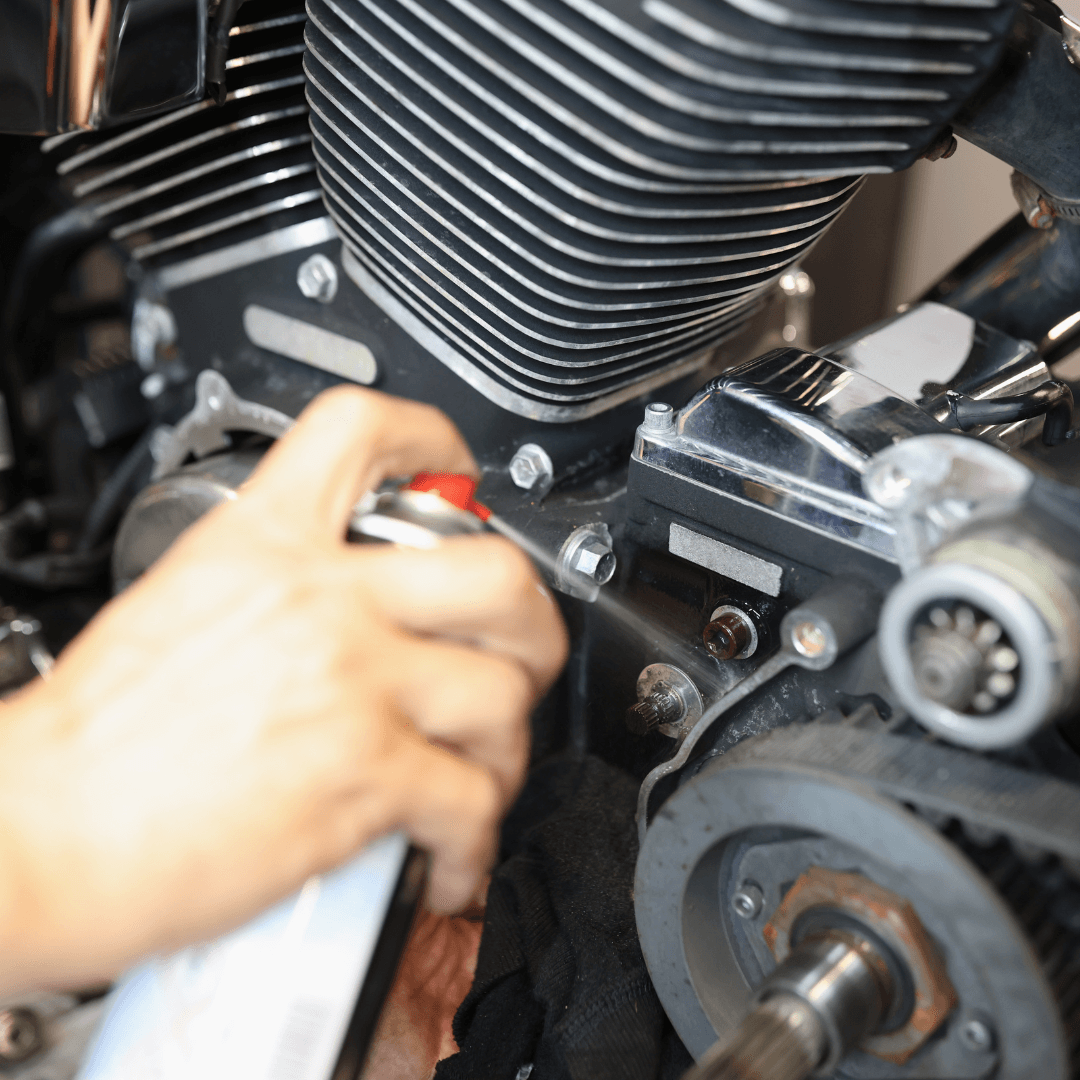
Among these options are aerosols, often containing multipurpose lubricants. Contained in a pressurised can, these lubricants are delivered as a spray and can be extremely useful for various requirements like rust prevention, noise reduction, loosening stuck mechanisms and preventing moisture.
However, while they offer multiple benefits, they also have certain drawbacks. Read on to update your understanding of the advantages and disadvantages of aerosol lubricants so you know when they are the solution best suited to your situation.
Advantages of aerosol lubricants
Spray on lubricants that come in a can are a welcome product when parts in need of lubrication are hard to reach. Some small mechanisms can be difficult to access like bearings and chains, making sufficient lubrication problematic – but an aerosol allows operators to apply oils and greases from a distance.
Easy application
Aerosol cans are easy to use and light to carry. Designed with a pressurised delivery system, this enable users to apply lubricant quickly and effortlessly, avoiding the need for other application tools like brushes.
Even coverage
Aerosol lubricant is released in an atomised fine mist that forms a thin, uniform layer of lubrication on a desired surface or tough-to-reach component. This can help lower the risk of both over-lubrication and under-lubrication, ensuring parts are effectively lubricated.
Too little lubricant can result in mechanical parts grinding against each other, causing friction, wear and damage, while too much lubricant can promote formation of unwanted deposits, impairing machine functionality and increasing maintenance downtime.
Consistent pressure
Spray lubricants combine an atomised process with a controlled dispensing method that supplies even and consistent pressure. This negates lubricant spills and, providing operators take care, mitigates overspray, resulting in less product waste.
Versatility
An agile lubrication option, aerosol oils and greases are ideal for a wide range of applications. Many products are formulated for multi-purpose use on multiple materials like metal, wood, plastic and rubber. Additionally, specialised formulations are available for specific applications including extreme-pressure and high-temperature conditions.
Cleanliness
Aerosol lubricant containers are hermetically sealed. This prevents cross-contamination occurring when other lubricants are in use during application.
As the lubricant is applied via a spray mechanism and not by hand, it is also a cleaner-to-use solution that promotes worker safety as it minimises contact with the product.
Disadvantages
While many applications benefit from aerosol lubricants, they can have disadvantages that make them unsuitable for others. In some cases, their negative characteristics can be mitigated by appropriate care and attention from users; however other limitations are unavoidable, making an alternative lubricant format a better choice.
Flammability
Aerosol cans themselves are pressurised and their contents are often highly flammable. As a result, when used near open flames and heat sources, they present a fire risk.
If lubricants are used incorrectly or stored improperly, it creates the potential for onsite explosions.
Overspray and contamination
While effective when used with controlled application, if employed carelessly, overspray can happen, causing other surfaces to become contaminated.
Overspray can leave surfaces slippery or lead to cross-contamination when other chemicals are spilled in the same area, making them a potential health and safety hazard.
Limited longevity
Many multipurpose spray-on lubricants only supply short-term lubrication. This makes them unsuitable for applications that require less frequent maintenance.
Additionally, they only provide a thin film of lubricant, which means they are not advisable for high-speed and heavy-duty mechanisms that require a thicker and longer lasting solution.
Potential for damage
Overspray from aerosol lubricants can damage surfaces. When lubricants can’t be removed, they can ruin paint work and varnishing, or if incompatible, damage rubber seals and plastic parts.
Environmental and health risks
Aerosol lubricants can result in multiple environmental issues. They release volatile organic compounds (VOCs) that contribute to smog formation and air pollution. When improperly disposed of, aerosol dispensers and the lubricant left inside them are classed as hazardous waste and can contaminate water and soil. In some cases, because the propellant has run out, cans still contain between 10 to 30 per cent of their lubricant.
While propellants used in the past like chlorofluorocarbons (CFCs) are phased out today, some modern propellants still impact global warming.
Appropriate personal protective equipment (PPE) and adequate ventilation are vital for using spray lubricants. Aerosol products are typically hazardous to human health if ingested or inhaled, and can cause irritation to eyes and skin.
Difficult to remove
Finally, when unwanted overspray occurs, some aerosol lubricants can be hard to remove. For instance, silicone lubricants can leave a residue on surfaces that is extremely difficult to clean off.
To make the most of aerosol lubricants, always ensure they are appropriate for your application.
You may also interested in:

How to find an equivalent lubricant for a discontinued oil
If the lubricant you use has become tough to source or suddenly been discontinued, finding an equivalent is the action required. Unfortunately, “equivalent” is among the most misused terms in
Are custom blended lubricants better than branded lubricants?
Lubricants play a critical role in keeping equipment running correctly. Multi-purpose products, they create a robust film over the surfaces of moving parts, working closely with others to ensure they