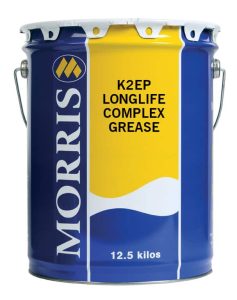

Excess moisture can cause havoc for machinery with metal parts. Water can be highly damaging, as it degrades lubricants, disrupts mechanical and electrical systems and accelerates structural wear.
Although it is classed as a universal solvent, the chemical properties of water mean it can be a serious threat to industrial equipment and its components.
Grease is a semi-solid lubricant that is prized for its water-resistant properties. It has a non-polar chemical composition and a unique physical structure that allow it to serve as a seal on mechanical parts, helping to protect them against water.
Companies such as Mobil and Fuchs have engineered different grease products specifically designed to provide advanced protection against water. Two prominent options include waterproof grease and water-resistant grease. Here, we examine these products in greater detail, looking at how they differ and the applications they are best suited to.
What is waterproof grease?
Specifically formulated to form a robust and dependable barrier, waterproof grease can provide a high level of resistance to water. Even when fully submerged for prolonged periods or in direct and continuous contact with water, it can resist washing away or breaking down, including under high pressure and in salt water.
This is because it contains specialised hydrophobic thickening agents such as aluminium complex, calcium sulphonate and anhydrous calcium, which may also be fortified with polymers to improve adhesion.
What is water-resistant grease?
While designed to withstand and retain its properties when subjected to occasional washout, humidity and moisture, water-resistant grease does not offer the same level of protection as waterproof grease. If it experiences extended contact with water, it may eventually wash away or emulsify, reducing its effectiveness.
Its formulation typically includes standard thickeners such as basic metal soaps, alongside additives such as rust inhibitors.
Applications for waterproof grease
The advanced protection offered by waterproof grease makes it an ideal choice for boat trailers, underwater bearings, marine steering components and industrial parts that are constantly submerged in salt water or fresh water.
Applications for water-resistant grease
The level of protection against moisture offered by water-resistant grease means it is often used for equipment exposed to the elements, such as agricultural and construction machinery, as well as general automotive chassis applications.
Always consult your OEM for guidance on the most suitable grease for a particular application.
You may also interested in:
What is the difference between high-temperature grease and standard grease?
Have you considered how high-temperature grease and standard grease differ? A range of greases are used in
Signs you're using the wrong grease
A semi-solid lubricant, grease combines an oil base with a thickening agent and additives that enhance