
13/07/2016 by OilStoreAdministrator
It’s completely understandable to be concerned if your hydraulic oil changes from its usual golden colour to a less pleasing shade of dark brown. The worry is that this change could mean something very serious formachinery, which if not fixed quickly could cause a serious problem.
However, we need to take into account the fact that industrial hydraulic oil is a very different beast from internal combustion oil, simply because it is used in a very different environment to the aforementioned lubricant. So, although noticing a change in the colour of one’s hydraulic oil is certainly a sign to keep a close eye on things, it is not such a serious problem that one must act to replace it straight away. Before considering that, it’s important to first determine the cause of the oil’s colour change.
Common causes of colour changes in hydraulic oil
There are two things that are most likely to cause a change in the colour of hydraulic oil: oxidation and thermal stress, and both of these things do not immediately require an oil change.
The first thing that should be done when a change in oil colour is noted is to take an oil sample and have it analysed by an expert. They will be able to determine whether the oil is still useable, or whether it would need to be replaced, thus potentially saving a significant sum of money.
Hot spots
More of a cause of oil darkening that is a concern, but one which also does not always mean an oil change is needed, are ‘hot spots’ – places in the system where the hydraulic oil is heated up excessively, but which becomes cool again once it reaches the reservoir. An infrared camera can be used to determine whether this is the problem causing oil to change colour, upon which repairs to the equipment can be made.
Oxidation
Whilst mild levels of oxidation are not too concerning, if oil becomes excessively oxidized, its acid levels will increase. This means that machinery components will probably begin to corrode and oil viscosity will get higher, which means that it is important to have it analysed. If it is found to be highly oxidized, it is always a good idea to have it replaced, so that you can have complete confidence in your machinery in the future.
What do colour changes in hydraulic oil indicate?
The visual appearance of hydraulic oil can offer valuable information. From Petronas to Morris, the colour of new hydraulic oil can vary, but is typically on a scale between clear and amber.
While not always the case, oil colour changes can indicate deterioration and contamination, both of which occur over the lifecycle of the fluid. As a result, some change is expected and does not necessarily mean that the oil needs replacing.
Darkening hydraulic oil is a sign of degradation, typically caused during overheating and resulting in thermal breakdown and, as mentioned above, oxidation. It can also indicate contamination from soot particles among other debris.
A milky or cloudy appearance, on the other hand, shows that the hydraulic oil is experiencing water contamination. This is a serious issue that can severely harm a hydraulic system.
Rapid darkening of the oil also requires immediate investigation. This is a serious sign of significant problems in the system that, if left unaddressed, can cause increased wear, poor performance and total system failure.
If the oil is lighter in colour, this generally means it is less degraded or brand new. However, if it experiences a swift and unexpected colour change, it has likely mixed with another lubricant.
What to do when you see a colour change in hydraulic oil
Substantial colour changes require operators to investigate immediately. You should inspect the hydraulic system for points of entry for external contamination like leaky seals and dirty breathers. Examine the filtration systems and ensure none of the hydraulic filters are clogged and being bypassed by the oil.
Extreme heat causes hydraulic oils to oxidise and thermally degrade. Operators can check for high temperatures using an infrared camera to discover if the system has any hot spots.
Perform oil analysis
Take a representative sample with the system running. Choose a point at the centre of the reservoir or immediately downstream from the pump. For visual comparison, always keep a sample of fresh hydraulic oil at hand.
Analyse the oil sample with a laboratory test for an accurate assessment of its condition. Look for contaminants causing colour changes like dirt, water and other types of oil and study oxidation levels.
If the contamination is severe, it may be advisable to consider a flush and filter to remove any residual contaminants.
You may also interested in:

How often should hydraulic oil be changed?
A critical factor in lubrication is understanding how frequently it requires replenishment.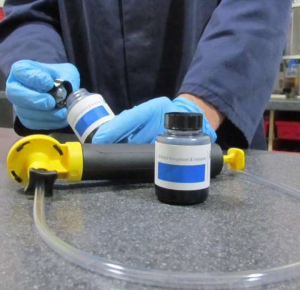
ISO VG 32 vs 46 hydraulic oil
Choosing the proper hydraulic oil viscosity is vital for operators maintaining hydraulic machinery who are charged with lubricant procurement.